
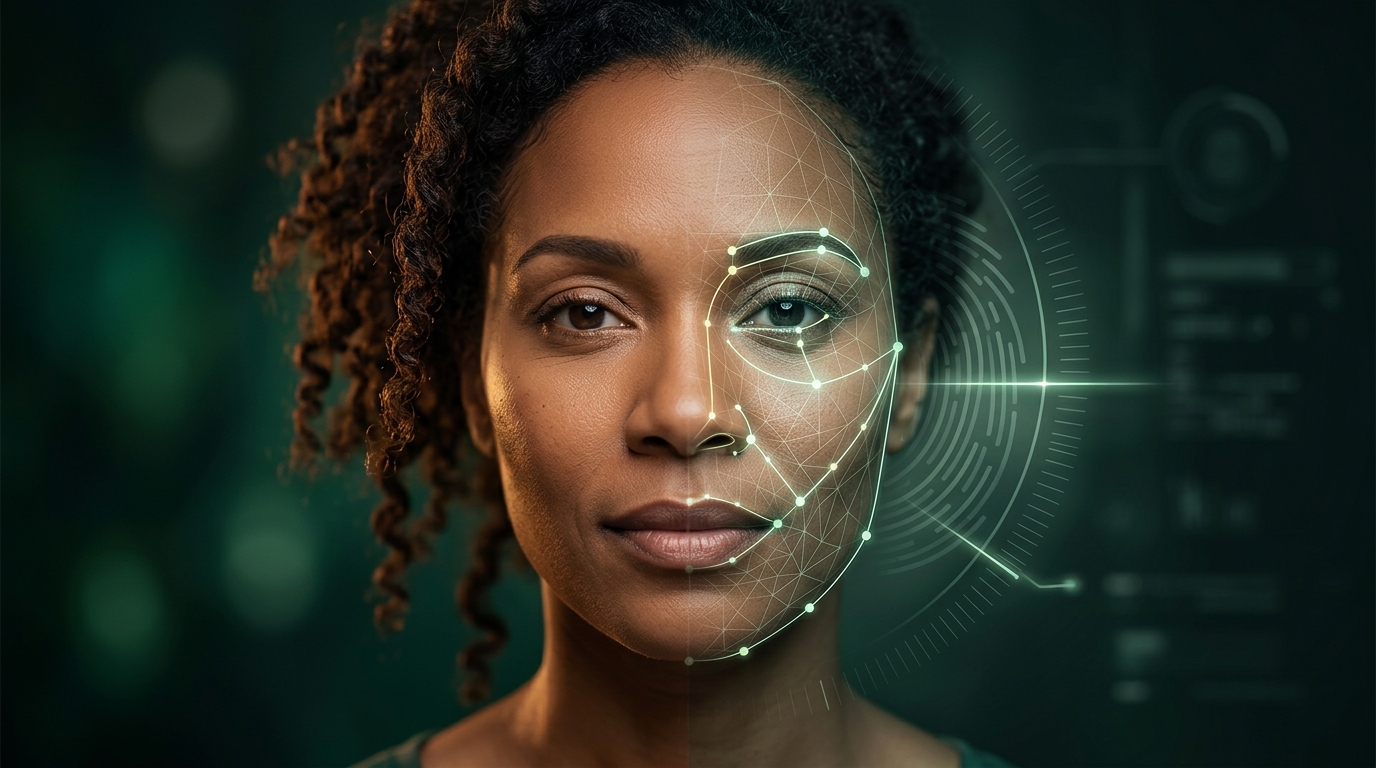
Direct Answer: What Face Age Estimators Actually Measure
Have you ever looked at a photo and wondered, “How old do I look?” Your face can sometimes appear younger or older than your actual age depending on factors such as lighting, facial expression, hairstyle, camera angle, skin texture, and image quality.
A face age estimator uses a photograph to provide an estimated apparent age based on visible facial characteristics. That estimate is fundamentally different from your chronological age, and it should never be treated as a medical, clinical, or biological measurement. Instead, it reflects an algorithmic synthesis of optical geometry, surface reflectance, and facial proportions captured in a single frame.
If you want to explore a photo-based estimate right now, you can use our verified Face Age Calculator to estimate your face age directly in your browser with private client-side processing.
What Does “How Old Do I Look?” Actually Mean?
When people ask themselves “how old do I look?”, they are rarely asking for a calendar calculation. Instead, they are inquiring about their apparent age—the subjective chronological bracket that human observers or computer vision systems assign to their outward physical appearance.
In human biology and biometric research, human aging is evaluated across four distinct dimensions:
- Chronological Age: The exact amount of calendar time elapsed since birth. This number is legally documented, mathematically unalterable, and determined purely by your date of birth.
- Face (Apparent) Age: How old an individual appears based strictly on visible facial geometry, soft-tissue distribution, skin surface textures, and external lighting conditions.
- Biological Age: An objective assessment of cellular health, organ function, and physiological wear. Determined via telomere length, DNA methylation patterns, epigenetic clocks, blood lipid panels, and cardiovascular metrics.
- Perceived Age: The qualitative impression formed by human observers during social interactions, heavily influenced by posture, vocal tone, conversational animation, and dress.
| Age Dimension | What It Means | How It Is Determined | Primary Purpose |
|---|---|---|---|
| Chronological Age | Calendar time elapsed since birth | Official date of birth (DOB) | Legal rights, milestones & civil status |
| Face (Apparent) Age | Estimated visual maturity of facial features | Visible facial structure & photo texture | Biometric estimation & visual interest |
| Biological Age | Physiological health state of cells & tissue | Epigenetic clocks & clinical biomarkers | Longevity, healthspan & wellness tracking |
| Perceived Age | Social impression of someone's age | Human intuition, clothing & demeanor | Interpersonal communication & culture |
Key Takeaway: Face age is an appearance estimate based on an optical image, not an internal measurement of your health, vitality, or lifespan. A tired photograph does not mean your body has prematurely aged.
To calculate your true calendar age down to the exact days, hours, and minutes, explore our verified Age Calculator. To explore how outward facial appearance is computed by software, let us look under the hood of automated face age estimators.
How Can a Face Age Estimator Guess Your Age?
Modern computer vision systems do not possess magical insight into human genetics. Instead, when an automated tool or artificial intelligence model inspects a portrait photograph to answer “how old do you look?”, it measures structural geometry and texture variations across five interconnected anatomical domains.
1. Facial Proportions and Craniofacial Geometry
As humans mature from early childhood through adulthood and into later decades, the structural relationship between facial bones and soft tissue undergoes progressive shifts. In infants and young children, the cranium is disproportionately large relative to the lower third of the face. In young adults, the facial thirds (forehead to brow, brow to base of nose, base of nose to chin) reach balanced geometric symmetry. In later decades, natural resorption of the mandible and maxilla subtly alters jawline projection and the vertical proportion of the lower face. Algorithms analyze these geometric ratios to identify adulthood milestones.
2. Skin Micro-Texture and Surface Gradients
A digital photograph records pixel luminescence gradients. Skin naturally loses dermal collagen and elastin reserves over time, reducing surface turgor and creating subtle shadows where superficial skin folds. Algorithms detect localized pixel contrast shifts—measuring the frequency and depth of horizontal forehead lines, glabellar frown lines between the eyebrows, nasolabial folds running from the nose to the corners of the mouth, and perioral lines around the lips.
3. Facial Contours and Volumetric Shadows
Subcutaneous adipose fat pads in the cheeks naturally descend or atrophy over decades. In youthful faces, the cheek exhibits a continuous, convex curve (the “ogee curve” of aesthetic anatomy). With maturing contours, shadows form under the zygomatic arch and at the pre-jowl sulcus along the jawline. Because algorithms evaluate lighting gradients, these volumetric shadows serve as strong statistical cues in age estimation models.
4. Eyes and Periorbital Surroundings
The skin surrounding the eyes is the thinnest on the human body (approximately 0.5 mm thick). Consequently, the periorbital zone is extraordinarily sensitive to both chronological passage and environmental exposure. Age estimators evaluate under-eye hollowing (tear trough deformity), infraorbital fat pad prominence, upper eyelid hooding (dermatochalasis), and lateral canthal lines (“crow's feet”).
5. Overall Facial Synthesis
No single feature dictates an algorithmic guess. A high-performing face age model does not simply count lines on the forehead; it synthesizes dozens of spatial feature vectors simultaneously. An algorithm looks for consistency across brow position, skin reflectivity, cheek fullness, and jaw definition. If an image displays youthful skin texture alongside pronounced under-eye shadows due to fatigue, the model balances these conflicting inputs probabilistically.
The Five-Stage Face-Age Estimation Pipeline
From initial sensor capture to an estimated apparent-age bracket: how computer vision processes facial characteristics without storing raw biometrics.
Why Can My Face Age Be Different From My Real Age?
If you upload two consecutive photos taken on the same afternoon, you may receive two noticeably different age estimates. Why does this happen? Because an apparent-age algorithm analyzes the photograph, not the human being behind it. Eight primary environmental and technical factors can dramatically sway the calculated outcome:
Lighting Direction & Quality
Harsh overhead sunlight or direct downward lamps cast steep shadows under the brow, nose, and lower lip, exaggerating micro-textures and creating the optical illusion of deeper wrinkles.
Camera Angle & Focal Length
Wide-angle smartphone lenses held close to the face cause barrel distortion, inflating the center of the nose and forehead while compressing the jawline, skewing facial third ratios.
Facial Expression & Muscle Tension
Squinting against glare or laughing dynamically bunches the orbicularis oculi muscles, temporarily creating deep dynamic skin folds that algorithms misinterpret as permanent static lines.
Image Resolution & Sensor Compression
Low-light photos taken with heavy digital noise compression can blur sharp boundaries or create artificial digital grain that algorithms misread as mottled skin pigmentation.
Cosmetics & Skin Care Products
Matte foundations, light-diffusing primers, and concealers neutralize micro-shadows in the tear troughs and smooth skin reflectance, consistently reducing apparent visual age.
Hairstyle & Facial Framing
Hair that frames the cheekbones or bangs that cover the forehead obscure prominent landmark zones, forcing the estimation model to rely on an incomplete subset of facial cues.
Transient Skin Hydration & Fatigue
Acute sleep deprivation, systemic dehydration, or recent sodium intake create temporary fluid retention or dullness, causing short-term visual changes unrelated to biological aging.
Automated Computational Filtering
Modern smartphone operating systems automatically apply multi-frame computational smoothing and sharpening. Heavy smoothing artificially lowers apparent age, while over-sharpening elevates it.
How Old Do I Look in a Photo vs in Real Life?
Human perception in face-to-face interaction operates on an entirely different level than computer vision algorithms evaluating a single two-dimensional still image. When friends, colleagues, or strangers assess how old you look in person, their brains process dynamic multi-sensory information that no photograph can replicate.
📷 In a Photograph
- Frozen Moment: Captures a single split-second expression, freezing fleeting muscle contractions into permanent-looking folds.
- Static Lighting: Shadows remain locked in place, regardless of whether they represent true anatomy or bad room lighting.
- Two-Dimensional Flattening: Loses stereoscopic optical depth, distorting the curvature of cheekbones and jaw contours.
- Hardware Bias: Sensor size, lens aperture, and digital sharpening algorithms alter skin texture rendering.
- Zero Behavioral Context: Cannot assess vocal tone, kinetic energy, posture, or physical agility.
👁️ In Real Life
- Dynamic Motion: Continuous micro-expressions reveal skin elasticity as dynamic lines immediately rebound when you relax.
- Shifting Illumination: Natural movement through ambient light instantly dispels unflattering localized shadows.
- Stereoscopic Depth: Human binocular vision perceives three-dimensional bone structure and volumetric youthfulness.
- Holistic Body Language: Upright posture, energetic stride, and fluid motor reflexes communicate biological vitality.
- Multi-Sensory Cues: Voice resonance, eye contact animation, and cognitive presence heavily shape perceived age.
Editorial Callout: A face-age estimate describes how old you may appear in a particular image under specific lighting conditions—not how old you appear to people in real life, and certainly not your actual biological health.

Can Two Photos of the Same Person Give Different Ages?
Yes, absolutely. In fact, receiving identical age estimates across different photographs of the same person is the exception, not the rule. Even when taken on the very same day, two photographs can easily yield estimated face ages that differ by five, eight, or even ten years.
☀️ Photo A: Soft Natural Daylight
- Lighting: Diffused north-facing window light fills tear troughs and periorbital hollows evenly.
- Angle: Camera positioned directly at eye level with 50mm portrait focal length.
- Expression: Relaxed, neutral resting muscles with smooth forehead and unwrinkled brow.
- Sensor: High optical clarity, zero digital zoom artifacts, natural color balance.
- Calculated Outcome: Yields a balanced, smooth, youthful apparent-age estimate.
💡 Photo B: Direct Downward Light
- Lighting: Overhead ceiling fixture casts steep dark shadows beneath eyebrows, nose, and lips.
- Angle: Low upward tilt from desk height exaggerates under-chin and jawline folds.
- Expression: Squinting against glare or dynamic smirk contracts orbicularis oculi muscles.
- Sensor: Low-light grain compression blurs crisp edges, creating artificial mottled texture.
- Calculated Outcome: Yields an apparent-age estimate 5 to 9 years older for the exact same person.
How Accurate Are “How Old Do I Look?” Estimates?
When asking “how accurate are face age calculators?”, it is essential to understand what accuracy means in statistical computer vision. A face age estimator does not produce an absolute physical measurement like a digital thermometer or a laboratory blood test. Instead, it generates a probabilistic median estimate based on the statistical models it was trained on.
Responsible platforms never claim that an algorithm is “99% accurate” or that it “knows your exact chronological age.” Here is how you should evaluate the accuracy of any photo-based age estimation tool:
- Probabilistic Approximation: High-performing models typically achieve a Mean Absolute Error (MAE) of roughly 3 to 5 years under controlled benchmark conditions. In casual consumer selfies with varied lighting, that variance can widen to 6 to 8 years.
- Algorithmic Variance: Different algorithms prioritize different visual features. One model may weigh eye contour geometry heavily, while another focuses predominantly on overall skin texture and hair color contrast.
- Apparent Age Is Inherently Subjective: Even human panels tasked with guessing someone's age exhibit standard deviations of 4 to 7 years. There is no single “ground truth” for how old someone looks because visual maturity exists on a natural demographic continuum.
- No Medical Diagnostic Value: An algorithmic estimate based on a JPEG photo cannot diagnose internal cellular senescence, organ status, or medical aging.
Face Age vs Actual Age vs Biological Age
To fully contextualize your results, it helps to separate the three core metrics that describe human age. Each metric answers a distinct physiological or chronological question:
Chronological Age
- Source: Verified legal date of birth (DOB)
- Progression: Advances strictly 1 year per 365.25 days
- Nature: Completely objective, fixed, and immutable
- Application: Legal rights, statutory retirement & civil status
Face (Apparent) Age
- Source: Facial geometry, skin texture & ambient lighting
- Progression: Variable across photos, angles, and fatigue levels
- Nature: Dynamic, probabilistic estimation from optical data
- Application: Curiosity, computer vision & appearance trends
Biological Age
- Source: Epigenetic clocks, DNA methylation & biomarkers
- Progression: Accelerates or slows based on health and lifestyle
- Nature: Internal cellular health and functional organ capacity
- Application: Longevity research, preventive wellness & fitness
Depending on which dimension of age you wish to explore, Age Calculator Lab provides specialized tools:
- Want to calculate your exact calendar milestones and astrological profile? Use our verified Age Calculator to calculate your actual age down to the exact day.
- Interested in cellular longevity and physiological wellness markers? Explore our Biological Age Calculator to estimate your biological age through lifestyle indicators.
- Curious about how your outward appearance photographs under modern vision models? Launch our client-side Face Age Calculator to estimate your face age from a photo.
What Makes Someone Look Younger or Older?
Perceived visual maturity is governed by a combination of genetic bone structure, long-term environmental exposure, and short-term optical presentation. When human observers or computer models evaluate a portrait, the following visual cues carry the greatest statistical weight:
- Facial Expression: Chronic frowning or brow-furrowing creates deep vertical creases; relaxed expressions smooth the brow.
- Ambient Lighting: Harsh overhead light casts steep shadows; diffused front lighting eliminates crease contrast.
- Skin Surface Texture: Smooth dermal reflection indicates youthful epidermal turnover; rough texture suggests cumulative sun damage.
- Visible Expression Lines: Permanent static lines around the nasolabial and periorbital regions signal advanced maturity.
- Hairstyle & Hair Color: Hair volume, hairline recession, and silver pigmentation strongly anchor demographic expectations.
- Cosmetic Application: Strategic highlighting and color correction neutralize shadows in the tear troughs and chin crease.
- Camera Perspective: Low-angle shots distort jawline firmness; eye-level framing maintains proportional bone balance.
- Sensor Resolution: Over-sharpened digital processing artificially amplifies pores, blemishes, and minor skin folds.
- Facial Volumetrics: High, full malar cheek pads project youthfulness; hollowed temples or sunken cheeks suggest aging.
- Periorbital Definition: Discoloration, puffiness, or loose skin beneath the eyes immediately elevates estimated age.
- Photo Post-Processing: Computational filters that blur skin texture produce synthetic, unnaturally low age numbers.
Clinical Disclaimer: While these physical characteristics influence visual presentation, they should never be interpreted as an official medical diagnosis of systemic aging, illness, or genetic health.
How to Get a Better Face Age Estimate From a Photo
If you plan to use an online age guesser or biometric tool, input photo quality determines the reliability of your result. To ensure the algorithm analyzes your true facial geometry rather than photographic artifacts, adhere to the following capture guidelines:
✓ DO (Recommended Setup)
- Use Diffused Daylight: Position yourself facing a bright window or evenly illuminated room to banish steep shadows.
- Hold Camera at Eye Level: Keep the phone or lens parallel to your face to prevent perspective foreshortening.
- Maintain a Neutral Expression: Keep your forehead smooth and jaw relaxed so the algorithm measures resting anatomy.
- Clear Your Face: Push hair back behind your ears and off your forehead so facial landmarks remain visible.
- Ensure Sharp Focus: Use a clean camera lens in good light to prevent motion blur and compression grain.
✕ AVOID (Skews Results)
- Beauty & Smoothing Filters: Digital airbrushing wipes out genuine facial texture, making estimates meaningless.
- Direct Overhead or Side Lights: Single-source point lights carve harsh black shadows across cheeks and eyes.
- Extreme Selfie Angles: Holding the camera high above your head or down near your chest alters facial proportions.
- Sunglasses or Heavy Frames: Tinted lenses and thick rims obstruct the entire periorbital zone, blinding the algorithm.
- Grainy Low-Light Selfies: Sensor noise in dark rooms creates fake pixel artifacts that look like deep skin wrinkles.
How a Face Age Calculator Can Help
Photo-based age estimators are popular across the web for both entertainment and self-discovery. When used thoughtfully, a face age tool provides several genuine practical benefits:
- Curiosity and Self-Exploration: Satisfies natural curiosity about how your current visual appearance registers on standardized computer vision benchmarks.
- Comparing Image Conditions: Testing photos taken under different lighting, camera angles, or hairstyles reveals how dramatically simple photography techniques alter perceived maturity.
- Understanding Computer Vision: Offers hands-on experience with facial landmark detection, biometric geometry, and machine-learning pattern recognition.
- Distinguishing Apparent vs Real Age: Helps users appreciate that external appearance is fluid and distinct from irreversible chronological years.
However, it is equally important to know what a face age calculator should never be used for:
- Never for Medical Assessment: A computer vision tool cannot evaluate cardiovascular health, skin cancer risk, or metabolic fitness.
- Never for Insurance or Financial Underwriting: Apparent age has zero legal or actuarial standing for life insurance or loan eligibility.
- Never for Legal Age Verification: Photo estimation tools cannot substitute for government-issued photographic identification.
Is a Face Age Calculator the Same as an Age Verification Tool?
No. Face age estimation and age verification are fundamentally different technologies with entirely different legal standards.
Face Age Estimation: A probabilistic software tool that evaluates a single photograph to estimate an approximate age bracket (e.g., “estimated 32–36 years old”). It does not verify identity, does not cross-reference government databases, and operates with a known margin of error. It is designed for informational, exploratory, and entertainment use.
Age Verification: A regulatory compliance mechanism used by banks, regulated platforms, and government agencies to confirm whether an individual meets a strict legal age threshold (e.g., 18+ or 21+). Professional verification requires certified government identity documents (passports, driver's licenses), cryptographic identity checks, and strict anti-spoofing biometric liveness detection.
An apparent face-age estimate should never be treated as legal proof of a person's age or identity.
Why AI Face Age Results Can Vary
If you test your photo across multiple online AI age guessers, you will discover that each service reports a slightly different number. Why does this variance occur across AI systems?
- Training Dataset Demographics: Machine-learning models learn age patterns from the datasets they are trained on. A model trained primarily on studio portraits with balanced lighting will interpret casual phone selfies differently than a model trained on unstructured social media snapshots.
- Feature Weighting Architectures: Some neural network architectures place high mathematical weight on periorbital micro-textures, while other architectures prioritize global craniofacial boundary ratios.
- Image Resolution & Preprocessing: Each platform rescales, crops, and normalizes input photos differently. Downsampling a 12-megapixel photograph to a 256x256 pixel tensor smooths out fine lines, while contrast-stretching filters emphasize shadows.
- Individual Anatomical Uniqueness: Human genetics produce immense natural diversity. High cheekbones, natural hooded eyelids, prominent brow ridges, or genetic skin pigmentation can register differently depending on the algorithmic architecture.
Ready to See How Old You Look in a Photo?
Upload a clear, well-lit photo to our private Face Age Calculator. Explore your estimated apparent age directly in your browser with no account registration and complete privacy.
Try the Face Age Calculator Now →Frequently Asked Questions
How old do I look?
A face-age estimator can provide an approximate estimate of your apparent age from a photograph by evaluating visible facial structure, lighting patterns, skin texture, and eye contours.
How can I find out how old I look?
You can use a photo-based face-age estimator such as the Face Age Calculator on Age Calculator Lab, which processes facial features directly in your browser without storing your photo.
Is face age the same as actual age?
No. Actual chronological age is calculated precisely from your date of birth, while face age describes apparent age based on outward optical appearance in a specific photograph.
Can a photo make me look older?
Yes. Harsh downward lighting, sharp side shadows, squinting facial expressions, low camera angles, and sensor compression can exaggerate fine lines and make you look several years older than you are.
Can AI guess my age from a photo?
AI-based vision models can estimate age from visible facial characteristics by comparing landmark patterns and texture distributions against trained demographic datasets, but the result remains an estimate rather than an exact measurement.
Why do I look younger in some photos?
Diffused soft lighting, neutral or relaxed facial expressions, eye-level camera placement, flattering lens focal lengths, and even skin illumination minimize shadows and make facial contours appear smoother and younger.
Is a face-age calculator accurate?
It can provide a reasonable apparent-age estimate when given a clear, well-lit, front-facing photograph, but it should never be treated as an exact chronological or medical age measurement.
Is face age the same as biological age?
No. Face age concerns superficial visual appearance, while biological age refers to internal physiological aging measured via cellular biomarkers, DNA methylation clocks, cardiovascular fitness, and metabolic panels.
Can face-age estimation prove someone's age?
No. An apparent-age estimate should never be used as legal proof of age, civil identity verification, or compliance screening, because photographic estimates are influenced by external environmental factors.
Can two photos give different face-age results?
Yes. Variations in lighting direction, camera distance, facial expression, grooming, cosmetics, and image compression routinely cause the same individual to receive estimates differing by 5 to 10 years across different photos.
Conclusion: Understanding Your Face Age Estimate
Ultimately, asking “how old do I look?” is fundamentally a question about optical perception, lighting, and facial geometry—not simply the number of calendar years that have elapsed since your birth. While your chronological age advances steadily day by day, your apparent face age in a photo is dynamic, subjective, and heavily influenced by the environment in which you are captured.
Whether an online tool estimates you as younger, older, or right on target, treat the result as an entertaining, informative glimpse into computer vision science. If you want to explore your own photographic estimate under optimal, private conditions, try our browser-based Face Age Calculator today.
Reviewed & Methodology
This article was reviewed for clarity, calculator methodology, computer vision terminology, and the responsible use of face-age estimation.
Author: Navjeet Kamboj
Site: Age Calculator Lab
Last reviewed: October 3, 2026
Age Calculator Lab algorithms adhere to client-side privacy standards. We do not store, harvest, or transmit user facial images to external servers.
