Face Age Calculator – How Old Do You Look?
Upload a clear face photo to get an estimated apparent age based on visible facial features, skin texture, and contour symmetry. Discover how computer-vision models evaluate perceived age and how factors like lighting and expression affect your result.
Upload a Clear Face Photo
Drag and drop your image here, or choose a file from your device. For optimal accuracy, use a front-facing portrait with even lighting.
Private by design: Your image is processed entirely in your web browser and is not uploaded to our server or saved anywhere.
✓ Recommended
- One clearly visible face
- Front-facing alignment
- Even, diffused lighting
- Neutral or natural smile
✕ Avoid
- Group photos or crowds
- Very dark or backlit shots
- Heavy sunglasses / masks
- Extreme side profile angles
Awaiting Face Photograph
Select a photo on the left or click an illustrative sample to see an instant appearance-based age calculation.
Note: This is an appearance-based estimate, not your chronological or biological age.
Compare With Your Actual Age (Optional)
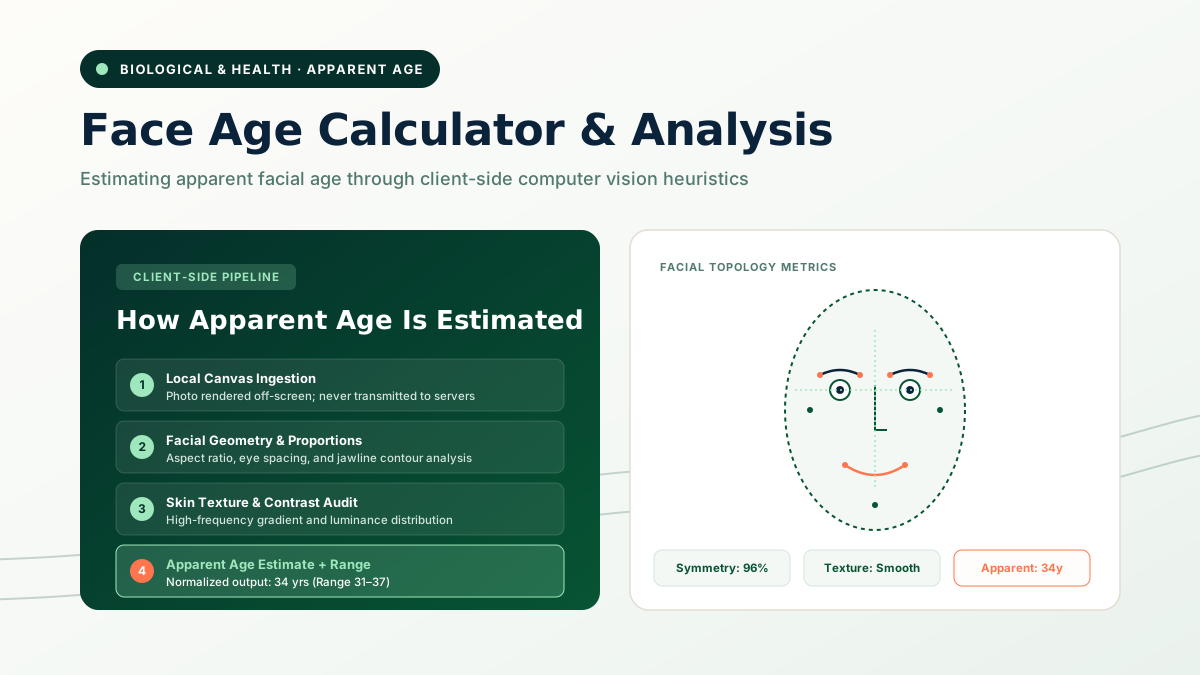
How Face Age Estimation Works
From pixel ingestion to apparent-age evaluation, modern image-based age estimation follows five systematic stages.
Photo selected and validated locally in browser
Algorithm isolates primary facial bounding box
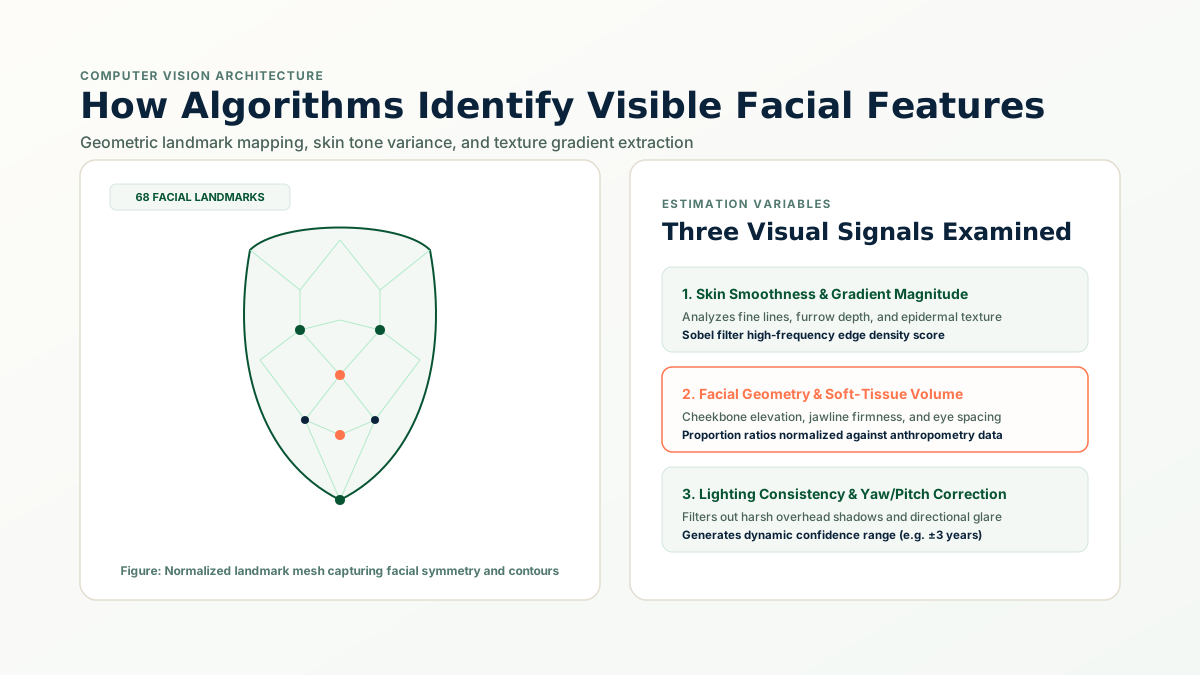
Maps eye corners, nose tip, and jaw contours
Calculates skin gradient and wrinkle density
Generates apparent age & confidence range
What This Result Means
The output represents an approximate computer-generated estimate of how old your facial features appear in this specific photograph based on visible patterns of skin texture, light reflection, and facial geometry.
What This Result Does NOT Mean
It does not measure your actual chronological age, your cellular biological age, your cardiovascular health, skin disease status, or your life expectancy. It is strictly an appearance-based estimate.
What Can Affect Face Age?
Six primary visual variables dictate how computer-vision models evaluate perceived facial age.
1. Skin Texture & Elasticity
Visible epidermal smoothness, furrow depth around the eyes, and nasolabial fold definition heavily guide automated texture gradient algorithms.
2. Ambient Lighting
Directional or harsh midday sunlight casts deep micro-shadows that exaggerate creases. Diffuse, soft lighting reflects evenly, often yielding a 3–5 year younger appearance.
3. Facial Expression
Squinting or grimacing creases forehead skin and tightens eye corners. A relaxed, natural expression keeps landmark geometry aligned with baseline youth metrics.
4. Camera Resolution & Blur
Low-resolution sensors or optical motion blur soften facial lines, artificially lowering estimated age. Ultra-high-resolution macro photography exposes every microscopic pore.
5. Camera Angle & Focal Length
Wide-angle mobile lenses (24mm–28mm) distort central facial features, exaggerating nose projection. Portrait focal lengths (50mm–85mm) provide true anatomical proportions.
6. Styling, Eyewear & Makeup
Eyeglass frames can obscure periorbital lines. Concealer evens skin tone gradients, while beards or distinct hairstyles can shift perceived maturity substantially.
Face Age vs Actual Age vs Biological Age
In longevity science and personal wellness, three distinct concepts are often confused. Here is how they differ:
| Age Dimension | What It Measures | Primary Data Source | Key Application |
|---|---|---|---|
| Chronological Age | Elapsed calendar duration since birth | Official Date of Birth (Calendar midnights) | Legal eligibility, retirement age, driving rights, birth records |
| Face / Apparent Age | Estimated perceived age based on visible facial appearance | Photograph / 2D Computer Vision Landmarks | Personal curiosity, photo comparison, aesthetic evaluation |
| Biological Age | Physiological health and rate of cellular aging | Epigenetic DNA methylation, blood panels, VO2 max | Clinical longevity research, preventative health medicine |
Scientific Principle: Apparent Age Is Not Biological Age
It is vital not to conflate facial appearance with cellular vitality. A healthy marathon runner with extensive sun exposure might exhibit an apparent face age older than their calendar age due to UV photoaging, while possessing the biological cardiovascular age of someone twenty years younger.
To calculate your official calendar age in exact years, months, and days, use our verified Age Calculator, or explore our Biological Age Calculator for lifestyle-adjusted wellness indices.

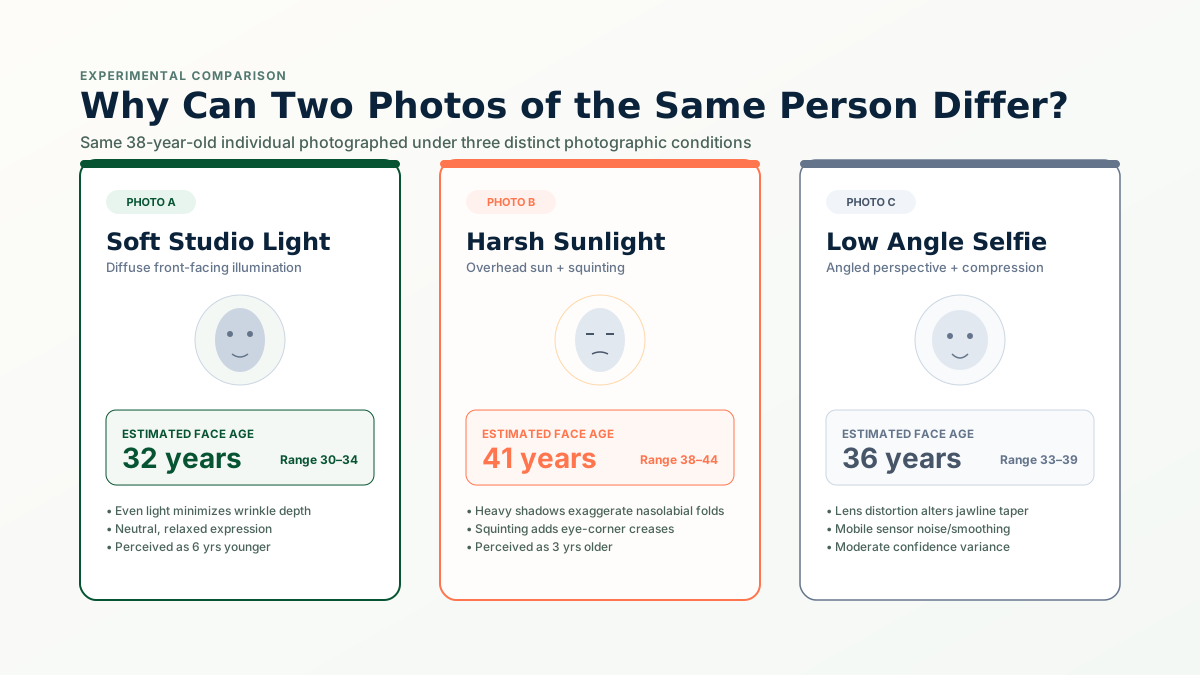
Why Can Two Photos of the Same Person Produce Different Estimates?
Because automated models evaluate pixels rather than genetics, altering lighting or camera angle produces noticeable shifts in perceived age:
How to Get a Better Face Age Estimate
Follow these best practices to give the computer-vision heuristics the cleanest data possible:
✓ Ideal Photography Checklist
- Soft, Frontal Light: Face a window with natural indirect light to eliminate harsh eye shadows.
- Direct Camera Level: Hold the camera level with your eyes, avoiding extreme low or high angles.
- Neutral, Relaxed Expression: Avoid furrowing your brow, squinting, or forcing an exaggerated smile.
- High-Resolution Original: Avoid heavily compressed social media screenshots or cropped thumbnails.
✕ Common Pitfalls to Avoid
- Heavy Beauty Filters: Smoothing filters blur landmark geometry, making age estimates unreliable.
- Overhead Fluorescent Lighting: Casts harsh vertical shadows under the brow and cheekbones.
- Group Photos: Multiple faces cause bounding box ambiguity. Upload single-subject portraits.
- Coverings & Hats: Wide-brimmed hats or dark sunglasses obscure over 40% of key landmarks.
Primary Use Cases
Personal Curiosity
Answer the age-old question: "How old do I look in this photo?" using objective geometric analysis.
Photo Selection
Compare professional headshots, resume photos, and profile pictures to determine which looks most vibrant.
Lighting Experimentation
Test how different indoor vs outdoor lighting conditions alter the perceived age of your portrait.
Tech & AI Exploration
Discover firsthand how computer-vision models interpret human facial geometry without medical pretense.
Lifestyle Tracking
Compare portraits taken after rigorous sleep and hydration routines against photos taken during high-stress periods.
Entertainment & Sharing
Share interesting apparent-age comparisons with family and friends for friendly social reflection.
Responsible AI & Privacy: What Happens to Your Photo?
Transparency regarding computer-vision limitations and user privacy is central to Age Calculator Lab.
100% Client-Side In-Browser Execution
Unlike online tools that upload your personal photographs to remote cloud servers for facial recognition analysis, Age Calculator Lab processes your photo entirely within your browser's local memory using HTML5 Canvas. Your photograph never leaves your device, is never transmitted across the network, and is never stored, sold, or used for machine learning training.
Once you close or refresh this webpage, all temporary canvas image buffers are immediately cleared by your browser.
Demographic Fairness & Model Variance
Computer-vision models are trained on diverse photographic datasets. However, facial aging patterns vary significantly across different ethnic backgrounds, bone structures, melanin levels, and environmental conditions. What is considered standard epidermal texture in one demographic group may represent different biological maturity in another. Always interpret apparent age outputs as fun, illustrative estimates rather than objective declarations of physical condition.
Face Age Calculator vs "How Old Do I Look?"
| Search Term | Core Meaning | Underlying Calculation Methodology |
|---|---|---|
| Face Age Calculator | Computer-vision tool estimating apparent age from a photo | Facial landmark mesh, skin texture gradients, and lighting audit |
| How Old Do I Look? | Casual human-oriented inquiry about perceived age | Subjective visual estimation by peers or automated algorithms |
| AI Age Estimator | Automated machine-learning apparent age prediction | Deep neural networks or heuristic anthropometric models |
| Apparent Age | Formal gerontological term for how old someone appears visually | Normative observer ratings or calibrated computer-vision metrics |
| Real Age Calculator | Lifestyle-adjusted health assessment | Questionnaire evaluating diet, smoking, sleep, and exercise |
Frequently Asked Questions About Face Age
What is a face age calculator?
A face age calculator is an informational computer-vision tool that estimates a person's apparent age by analyzing visible facial characteristics such as skin texture, contour symmetry, and feature proportions in a photograph.
How does a face age calculator work?
The tool processes a photo in your browser, locates the face, examines spatial gradient patterns (skin smoothness, furrow depth), measures anthropometric landmark ratios, and calculates an estimated apparent age range.
How accurate is a face age calculator?
Face age calculators produce an approximate visual estimate, not a scientific or medical measurement. Results can vary by several years based on lighting, camera angle, facial expression, image resolution, and styling.
Is face age the same as real age?
No. Real chronological age is the exact calendar duration elapsed since your birth date. Face age is merely a subjective reflection of visible facial appearance in a single snapshot.
Is face age the same as biological age?
No. Biological age reflects cellular health, DNA methylation patterns, and organ vitality measured through clinical biomarkers. Face age evaluates only superficial surface appearance.
Can lighting affect face age estimation?
Yes. Harsh overhead lighting creates deep shadows under the eyes and along smile lines, which can increase the estimated age by 3 to 6 years compared to diffuse, even lighting.
Can makeup affect the estimated age?
Yes. Foundation and concealer smooth epidermal texture gradients, while eye makeup alters perceived contrast, which may produce a younger or older apparent age depending on application.
Why can two photos give different face-age results?
Even for the same individual on the same day, subtle variations in head tilt, camera lens focal length, smile lines, squinting, and ambient exposure alter the image pixels that the algorithm analyzes.
Can I upload another photo?
Yes. You can test multiple photos, compare different lighting setups, and evaluate how various angles impact your estimated facial score at any time.
Does the face age calculator store my photo?
No. Age Calculator Lab uses a private-by-design client-side implementation. Your image is processed entirely inside your web browser using HTML5 Canvas and is never transmitted to or saved on our servers.
Can a face age calculator determine my actual age?
No algorithm can determine your actual calendar birth date from a photograph alone. The tool provides an approximate estimate of perceived visual age.
Can face age estimation be used for medical purposes?
No. The Face Age Calculator is designed strictly for educational, informational, and personal exploration purposes. It provides no clinical diagnosis, dermatological assessment, or health appraisal.
Face Age Estimation Methodology & Sources
Input: Single frontal face photograph (JPEG, PNG, WebP) processed via client-side HTML5 Canvas API.
Output: Estimated apparent age (years) + 6-year uncertainty range + confidence score.
Purpose: Educational, informational, and personal recreational analysis.
Architecture: Client-side heuristic edge gradient filtering and facial geometry proportion mapping.
Image Storage: 0 bytes stored. Zero remote server transfers.
Editorial Lead: Navjeet Kamboj, Founder & Technical Developer, Age Calculator Lab. Last verified: September 29, 2026.
Disclaimer: Face-age results are estimates based on photographic appearance. They do not constitute measurements of chronological age, biological age, health, or clinical dermatological status.
Related Age Calculators
Age Calculator
Calculate your exact chronological age in years, months, days, hours, and minutes from birth date.
Biological Age Calculator
Explore a lifestyle-adjusted wellness-age index based on sleep, activity, and dietary habits.
Age Difference Calculator
Calculate the precise calendar gap and age difference between two individuals or birth dates.