
Introduction: Three Different Stories of Age
Your face age, chronological age and biological age can tell very different stories. Chronological age is based on how much time has passed since you were born. Face age describes how old you may appear based on visible facial characteristics, while biological age refers to concepts related to physiological aging.
Because these terms are often used interchangeably online, it can be difficult to understand what a face-age estimate actually means. A person can have one chronological age, a different apparent face age and biological indicators that do not correspond exactly to either number. If you want to explore your apparent age from a photograph, try our verified Face Age Calculator.
In this guide, we'll explain the difference between face age, chronological age and biological age, how each is determined, why they can differ, and when each type of age calculation is useful.
What Are Face Age, Chronological Age and Biological Age?
Before examining the mathematics and physiology, understand the fundamental distinctions between these three pillars:
| Age Dimension | What It Describes | Typical Basis |
|---|---|---|
| Chronological Age | How long you have lived in calendar time | Certified date of birth (DOB) |
| Face (Apparent) Age | How old you appear in a photograph | Visible facial structure & photo conditions |
| Biological Age | Physiological state of cellular & organ systems | Clinical biomarkers & epigenetic indicators |
Key Takeaway: These three concepts should never be treated as interchangeable measurements. A discrepancy between them is normal and expected.
What Is Chronological Age?
Chronological age is the conventional measure of time elapsed between a person's birth date and a specific reference date (typically today). It is defined by calendar mathematics: Date of birth $ ightarrow$ Current date $ ightarrow$ Chronological age.
It can be calculated in years, months, days, weeks, hours, and seconds. Because it is tied to an unalterable historical event, chronological age is legally documented and universally used for school eligibility, voting rights, and retirement thresholds. You can use our verified Age Calculator to calculate your exact chronological age.
What Is Face Age?
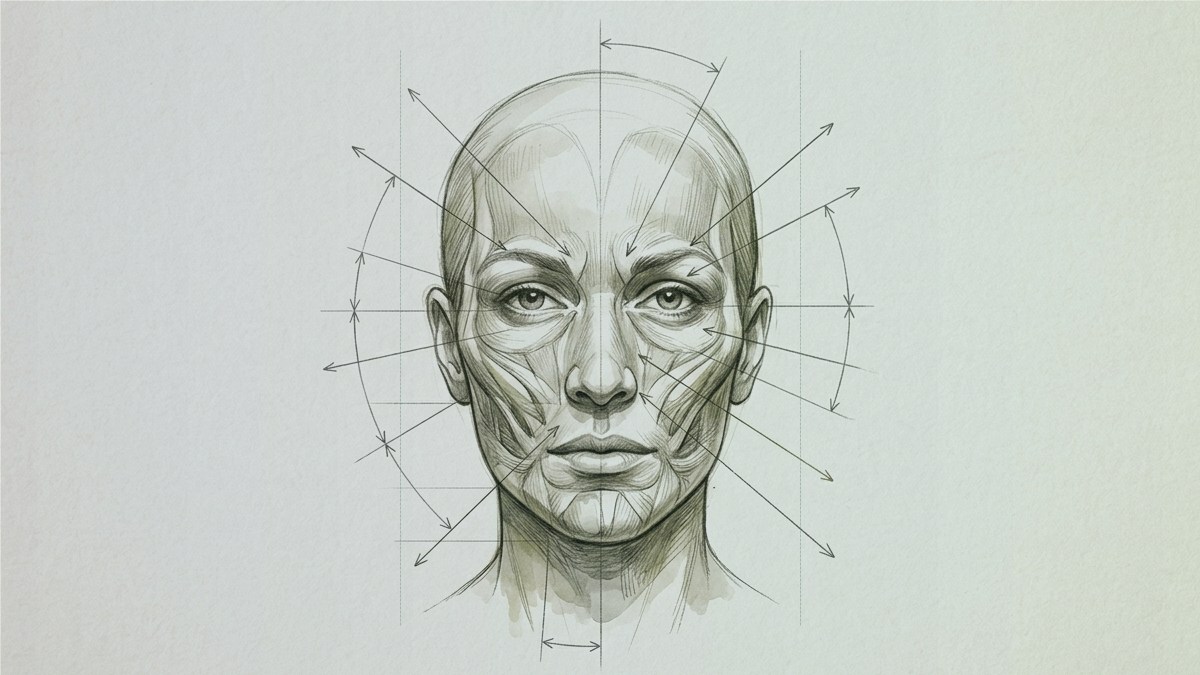
Face age (or apparent age) is an estimate of how old someone appears based on outward facial characteristics captured in a visual image. It is evaluated by human observers or computer vision algorithms analyzing facial structure, dermal texture, periorbital contours, lighting, and camera angle.
Crucially, face age is an optical estimate, not a measurement of elapsed time. Explore our verified Face Age Calculator to see how apparent age is evaluated.
What Is Biological Age?
Biological age describes the physiological wear and cellular vitality of an individual's organs and tissues relative to statistical population averages. Unlike chronological age, biological aging can accelerate or decelerate depending on lifestyle, nutrition, sleep, cardiovascular exercise, and genetic predisposition.
Depending on the clinical assessment, biological age can be estimated using DNA methylation epigenetic clocks (such as the Horvath or GrimAge clocks), telomere length assays, VO2 max tests, and metabolic blood panels. You can explore wellness aging habits using our Biological Age Calculator.
The Science of Epigenetic Clocks and Cellular Aging Biomarkers
In modern biogerontology, the study of biological aging has evolved dramatically beyond broad generalizations about vitality. Researchers now measure biological aging using high-resolution molecular assays known as epigenetic clocks. Developed by scientists such as Steve Horvath and Morgan Levine, these clocks evaluate DNA methylation patterns—chemical modifications that attach to cytosine bases in DNA over decades—to quantify the rate at which an individual's genome is aging relative to population baselines.
Epigenetic algorithms such as DNAm GrimAge, PhenoAge, and DunedinPACE do not merely count calendar birthdays; they measure systemic cellular inflammation, metabolic wear, organ reserve, and cardiovascular functional capacity. For example, a 50-year-old with exceptional cardiovascular conditioning and balanced metabolic regulation may exhibit a DNAm biological age corresponding to a 42-year-old. Crucially, however, none of these complex molecular processes can be measured from a 2D digital photograph, which is why superficial facial appearance must never be confused with internal cellular health.
Can Lifestyle Interventions Bridge the Gap Between Ages?
While certified chronological age advances relentlessly by 365 days each year without possibility of deceleration, biological aging exhibits genuine plasticity. Long-term longitudinal studies consistently demonstrate that sustained lifestyle modifications—including progressive aerobic and resistance exercise, circadian-aligned sleep hygiene, nutrient-dense nutrition, and smoking cessation—can measurably slow the rate of physiological decline.
Interestingly, some positive lifestyle habits that improve internal biological health (such as outdoor endurance running) can simultaneously expose skin to environmental ultraviolet radiation and wind, which may increase visible expression lines or skin pigmentation. Consequently, an elite master runner might possess exceptional cardiovascular biological age alongside a mature outward facial age, illustrating why the three dimensions of aging tell complementary but independent stories.

Why Can Face Age Be Different From Chronological Age?
Consider an individual who is 40 years old chronologically. In a well-rested portrait taken in soft daylight, an algorithm might estimate their face age at 35. Three days later, under harsh overhead lighting after a long flight, a new photograph might produce an estimate of 43.
Their certified chronological age remained 40 throughout. The apparent face age changed because face age reflects optical representation rather than calendar time.
What Can Make Someone Look Younger or Older in Pictures?
Visible apparent age is shaped by a combination of physical anatomy and photographic variables:
- Lighting: Soft diffused light smooths facial micro-shadows; directional light highlights expression folds.
- Facial Expression: Dynamic smiles temporarily contract periorbital muscles.
- Skin Hydration & Elasticity: Surface moisture alters light reflectance and smoothness.
- Camera Perspective & Distance: Lens focal lengths alter facial width proportions.
- Hairstyle & Framing: Hair volume, fringes, and beard growth alter visible landmarks.
- Cosmetics: Foundation and contouring modify light scattering and shadows.
- Image Resolution: Sensor compression and blur soften or artificially sharpen textures.
Why Can Biological Age Be Different From Chronological Age?
Chronological age treats every human body as an identical clock ticking forward by one year every 365 days. In human biology, however, organs experience different rates of wear:
Daily endurance training, optimal sleep, non-smoker $ ightarrow$ Epigenetic biomarkers reflect physiological function of a 39-year-old.
Chronic stress, sedentary lifestyle, metabolic inflammation $ ightarrow$ Biomarkers reflect physiological function of a 51-year-old.
Scientific Note: Biological age estimates depend on the specific biomarker panel and clinical methodology employed. There is no single universal biological age number.
Can Face Age Tell You Your Biological Age?
No—not by itself. A photograph shows outward optical features, not an internal cellular assay.
While severe chronic disease can manifest visually (such as deep pallor or muscle wasting), outward appearance in a single photograph is heavily confounded by external variables like lighting, makeup, and camera angles. A photograph cannot measure arterial stiffness, blood glucose levels, or telomere length.
Detailed Comparison: Face Age vs Chronological Age
| Feature | Face (Apparent) Age | Chronological Age |
|---|---|---|
| Primary Basis | Visible facial features in an image | Certified date of birth |
| Requires Photograph? | Yes | No |
| Mathematically Exact? | No (probabilistic estimate) | Yes (calendar subtraction) |
| Can Vary Between Photos? | Yes (shifts with lighting & angle) | No (constant across all photos) |
| Legal Validity | None (exploratory estimate) | Universally accepted legal standard |
Detailed Comparison: Face Age vs Biological Age
| Feature | Face (Apparent) Age | Biological Age |
|---|---|---|
| Primary Focus | Superficial outward visual appearance | Internal physiological organ & cellular health |
| Typical Input | Portrait photograph | Biomarkers, DNA methylation, blood panels |
| Shifts With Lighting? | Yes | No |
| Medical Relevance | Informational / curiosity only | Clinical longevity & wellness tracking |
Detailed Comparison: Chronological Age vs Biological Age
| Feature | Chronological Age | Biological Age |
|---|---|---|
| Core Concept | Total calendar time elapsed since birth | Physiological wear & functional capacity |
| Determined By | Date of birth | Clinical health assays & lifestyle markers |
| Can You Change It? | No (time moves forward constantly) | Yes (lifestyle interventions can decelerate it) |
| Primary Purpose | Legal rights, civil status, milestone dates | Preventative medicine, longevity & wellness |
Can Someone Look Younger Than Their Actual Age?
Yes, in terms of perceived visual appearance. Balanced skeletal geometry, high dermal moisture, genetic collagen density, and flattering camera angles frequently cause an individual to appear younger than their chronological age. However, looking younger visually does not automatically mean one is biologically younger internally.
Can Someone Look Older Than Their Actual Age?
Yes. The same principles apply in reverse. Dehydration, temporary fatigue, direct downward lighting, and high-contrast camera sensors can make an individual appear several years older than their calendar birth date.
Why Different Age Calculators Give Different Answers
Users are often confused when different calculators yield different numbers. The reason is that each tool processes different inputs to answer a distinct question:
- Chronological Age Calculator: Answers “How long have I lived?” using date of birth.
- Face Age Calculator: Answers “How old do I appear in this photo?” using pixel geometry.
- Biological Age Calculator: Answers “How is my body aging relative to my lifestyle?” using health indicators.
Which Age Should You Use? (Decision Framework)
- Use Chronological Age for legal paperwork, civil rights, milestone celebrations, insurance policies, and retirement eligibility.
- Use Face Age for fun photographic exploration, understanding portrait lighting, and testing computer vision biometrics.
- Use Biological Age for personal wellness tracking, preventative health improvements, and athletic conditioning.
Choose the Right Age Calculator for Your Needs
Calculate Actual Age
Find your certified calendar age down to the exact days, hours, and minutes from your date of birth.
Estimate Face Age
Upload a clear photo to explore an approximate apparent-age estimate processed privately in your browser.
Explore Biological Age
Evaluate lifestyle and physiological factors to discover your wellness and biological age indicators.
Frequently Asked Questions
What is the difference between face age and chronological age?
Chronological age is calculated strictly from your certified date of birth, while face age estimates how old you appear in a photograph based on outward visual characteristics.
Is face age the same as biological age?
No. Face age concerns superficial visual appearance, while biological age relates to physiological cellular wear, organ health, and internal biomarker indicators.
Can my face age be younger than my actual age?
Yes. Favorable lighting, balanced facial proportions, smooth skin hydration, and restful expressions can create an apparent age significantly younger than your actual calendar age.
Why does my face age differ from my actual age?
Photographic conditions such as lighting angle, camera lens focal length, facial expression, skin hydration, and styling alter the visual cues available to observers and algorithms.
Can a face-age calculator determine biological age?
No. A photograph alone cannot measure internal telomere length, DNA methylation clocks, cardiovascular fitness, or physiological biomarkers.
How is chronological age calculated?
Chronological age is calculated by measuring the exact elapsed calendar time between a person's birth date and a reference date.
Can two people with the same chronological age have different face ages?
Yes. Natural genetics, facial bone structure, lifestyle habits, sun exposure, and photographic conditions lead people of the same birth year to appear different ages.
Can two people with the same chronological age have different biological ages?
Yes. Individual cardiovascular fitness, metabolic health, genetics, and stress levels cause physiological systems to age at different rates.
What does “apparent age” mean?
Apparent age refers to how old a person visually appears to be to human observers or computer vision models in a specific visual instance.
Which calculator should I use?
Use an Age Calculator for actual calendar milestones, a Face Age Calculator to explore visual appearance, and a Biological Age assessment to evaluate physiological wellness habits.
Conclusion: Choosing the Right Lens on Aging
Face age, chronological age and biological age describe different aspects of aging. Chronological age tells you how much time has passed since your birth. Face age describes how old you may appear, while biological-age concepts relate to physiological aging and depend on the methodology used.
These numbers do not need to match. Someone can have one chronological age, appear somewhat younger or older in a photograph, and have biological indicators that tell a different story. Understanding the distinction helps you choose the right calculator for the question you're actually asking. Explore our Age Calculator, test your photo with the Face Age Calculator, or read our guide on face age calculator accuracy.
Reviewed & Methodology
Reviewed by: Navjeet Kamboj
Focus: Comparative aging terminology, chronological computation, biometric modeling, and responsible scientific interpretation.
Last reviewed: October 3, 2026
Methodological Notice: Calculations and comparisons on Age Calculator Lab are developed for educational and exploratory purposes. They do not substitute for formal clinical medicine, diagnostic pathology, or legal identity authentication.
