
Introduction: The Puzzle of Photographic Age
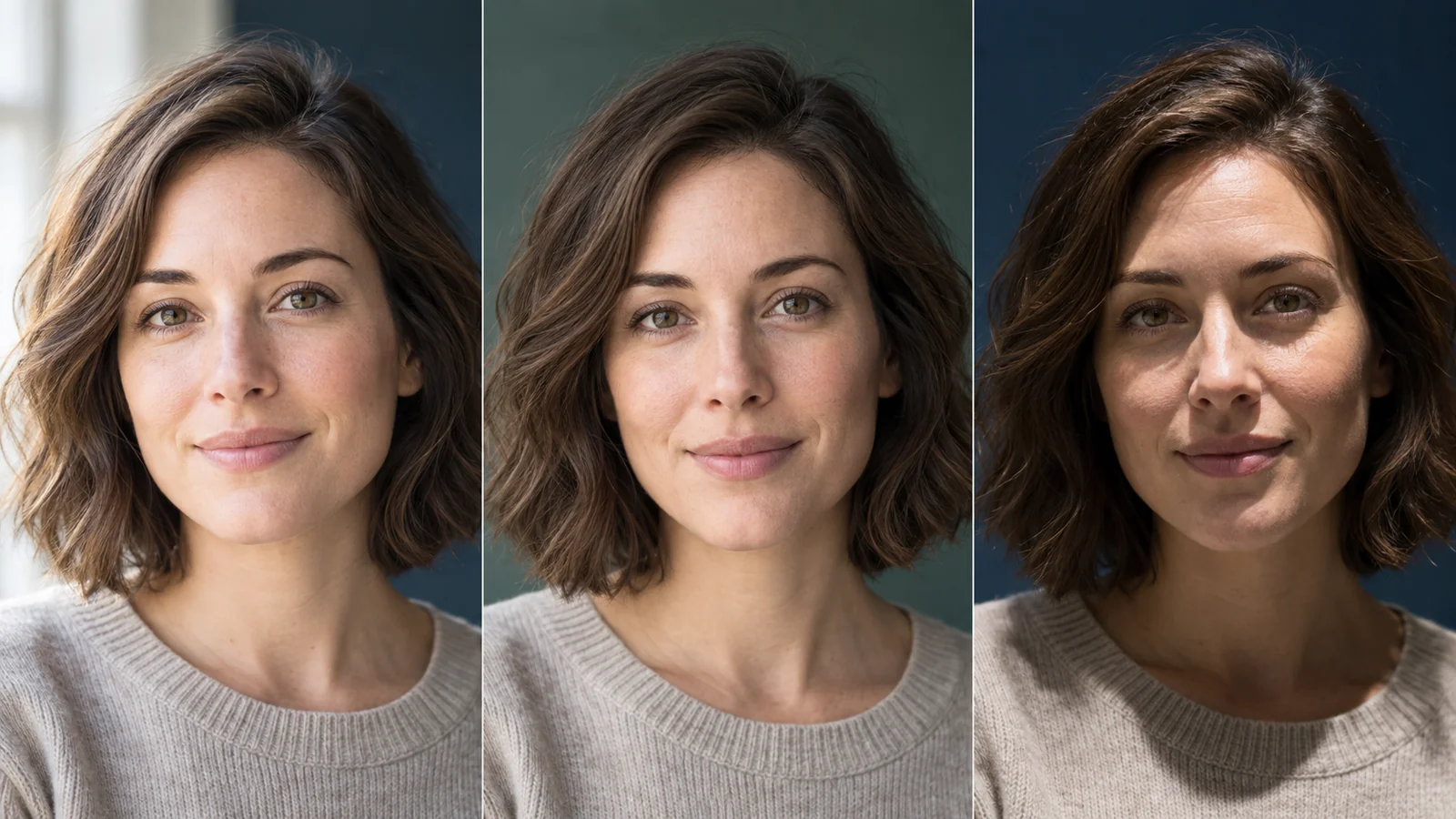
Have you ever looked at two photos of yourself and wondered why you appear noticeably older in one and younger in another? This is common. A photograph captures only one moment, from one camera angle, under one lighting condition, with one facial expression.
These differences can change how facial features are perceived and therefore influence apparent age or an estimated face age. That doesn't mean your actual age has changed. Instead, the photograph may be presenting your face differently. If you want to see how an image-based estimate works, try the verified Face Age Calculator.
In this guide, we'll look at 10 factors that can make the same person appear older or younger in different photos, how these factors affect face-age estimates, and how to take a more consistent photo when using a face-age calculator.
Why Can the Same Person Look Different in Different Photos?
A photograph is not a perfect holographic representation of a person's living anatomy. Rather, a photograph is a 2D optical flattening of 3D facial contours, recorded by a digital sensor through a glass lens under momentary environmental illumination.
Because lighting, perspective, facial muscle tension, and distance change continuously throughout the day, the visual information delivered to an observer—or a computer vision model—varies dramatically between shots. Your chronological age remains steady, but the visual cues captured in pixels shift.
10 Factors That Can Change How Old You Look in a Photo
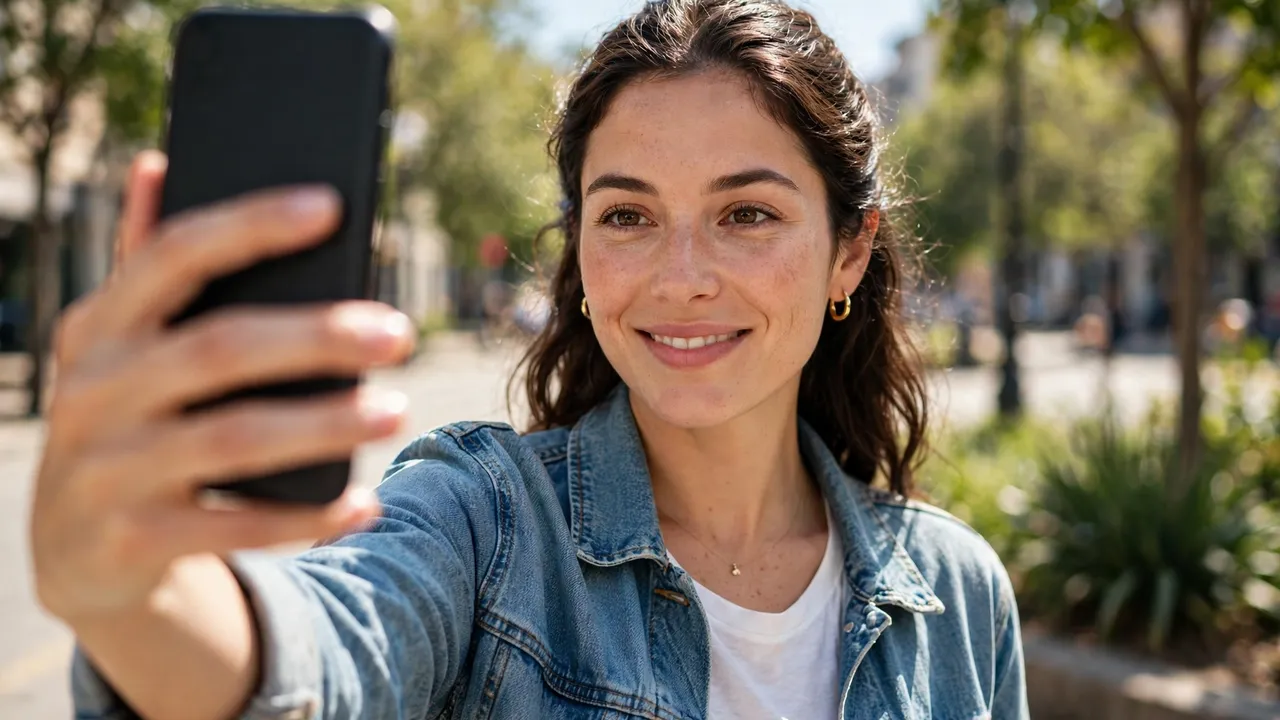
Ten primary physical and optical variables determine whether an image produces a youthful or mature impression:
Lighting Direction and Softness
Soft, diffused light fills surface crevices smoothly. Hard overhead ceiling lights cast dark downward shadows in tear troughs, beneath the nose, and under the jaw, accentuating skin texture.
Camera Angle and Elevation
High angles shrink jaw proportions and broaden the forehead, while upward low angles exaggerate neck tissue and jawline weight. Eye-level maintains neutral proportions.
Facial Expression and Muscle Tension
Smiling, squinting, or laughing contracts dynamic facial muscles, producing temporary crow's feet and nasolabial folds that disappear in a relaxed resting expression.
Camera Distance and Lens Perspective
Short camera distances with wide-angle smartphone lenses distort facial thirds (making the nose appear larger and ears smaller). Moderate telephoto portraits preserve natural anatomy.
Image Quality and Sensor Resolution
Extreme sensor noise, compression artifacts, and digital blur obscure facial landmarks, while hyper-sharp studio lenses under harsh flash can artificially exaggerate micro-pores.
Shadow Patterns and Contrast Ratios
Strong side lighting creates stark directional shadows across cheek planes, visually deepening natural lines and creating an older apparent impression.
Makeup and Cosmetics
Matte foundations, concealers, and contouring powders visually reshape shadows, smooth skin color gradients, and modify dermal light reflectance.
Hairstyle and Facial Framing
Hair frames the face. Bangs cover forehead lines, while voluminous styles alter the perceived vertical-to-horizontal aspect ratio of the skull.
Filters and Digital Photo Editing
Beauty presets artificially smooth dermal textures, enlarge eyes, and narrow the chin, creating an altered apparent age that diverges from physical reality.
Pose and Head Position
Tilting the head back stretches neck skin, while tilting down compresses chin tissue. Slight three-quarter turns shift symmetry and visible contour depth.
Micro-Expressions and Dynamic Facial Muscular Engagement
Beyond conscious smiles or frowns, the human face contains over 40 distinct skeletal muscles capable of generating thousands of fleeting micro-expressions. In spontaneous or candid photographs, subtle involuntary muscle contractions—such as squinting slightly against bright sunlight, raising a single eyebrow in curiosity, or clenching the jaw during concentration—momentarily bunch superficial subcutaneous tissue. These dynamic muscular contractions temporarily produce deep forehead ridges, glabellar furrowing between the brows, and periorbital crow's feet.
In high-resolution smartphone photography, these transient micro-expression creases are captured with extreme sharpness. An automated age estimation algorithm lacks the ability to deduce whether a furrow is permanent resting dermal elastosis or merely a 100-millisecond muscle twitch. As a result, candid action shots almost universally register older apparent-age estimates than calm, rested portraits captured when all facial muscle groups are fully relaxed.
Skin Hydration, Transepidermal Water Loss, and Surface Reflectance
Human skin appearance is remarkably sensitive to acute systemic hydration levels. After a transatlantic flight, an intense workout, or an evening of poor sleep, transepidermal water loss temporarily reduces cellular turgor in the stratum corneum (the outermost layer of the epidermis). Dehydrated dermal tissue reflects incident light diffusely with less specular brilliance, casting miniature micro-shadows within normal epidermal skin folds.
Conversely, optimal hydration and topical moisture create a smooth, plump surface that reflects incident light evenly with a natural specular sheen. This smooth optical reflectance minimizes shadow contrast in photographic captures, causing computer vision edge-detection filters to measure substantially lower high-frequency texture gradients. Consequently, the same face can register an apparent age variation of 3 to 5 years across consecutive days simply due to dermal hydration and ambient humidity.
Why Does My Face Look Older in Some Photos?
A photo may make your face appear older due to a combination of strong downward shadows, unflattering camera positioning, dynamic squinting expressions, and harsh sensor contrast.
Crucial Reminder: Looking older in one photograph does not mean that you have suddenly aged. It simply means that specific photograph captured an unfavorable combination of optical shadows and angles.
Why Do I Look Younger in Some Photos?
The exact same physical principles apply in reverse. Soft, diffused daylight facing a window, a relaxed and rested facial posture, an eye-level camera placement, and gentle lens focal lengths minimize shadows, rendering facial contours smooth, rested, and visibly younger.
Does the Camera Really Change How Old You Look?
The camera doesn't change your chronological age, but the photograph can change how your appearance is perceived.
Your Actual Chronological Age: Remains identical minute by minute based on birth record.
The Photograph: Captures one fleeting optical instance of light, distance, and muscle tension.
The Observer / Algorithm: Interprets the visual pixel signals available in that single frame.
Why Can a Face Age Calculator Give Different Results for Different Photos?
As detailed in our analysis of how accurate face age calculators are, automated systems evaluate digital pixels directly. When a new photograph introduces deeper shadows or a different camera angle, the algorithm evaluates different visual features:
- Photo A (Diffused Light, Neutral): Balanced landmark geometry $ ightarrow$ Face-age estimate A
- Photo B (Overhead Downlight): Deep orbital shadows $ ightarrow$ Face-age estimate B
- Photo C (Dynamic Expression): Contracted periorbital muscles $ ightarrow$ Face-age estimate C
This variance does not mean one result represents your “true age”; it confirms that estimates are tied to image characteristics.
What Is the Best Photo for Face Age Estimation?
For more consistent, balanced comparisons, ensure your image meets these criteria:
- Full, unobstructed view of both eyes, nose, and chin
- Balanced, indirect natural daylight facing a window
- Minimal extreme shadows or directional side lighting
- Camera positioned directly at eye level at comfortable arm's length
- Neutral, rested facial posture without squinting or forced frowning
- Uncompressed original camera capture without beauty filters
Better Input $ ightarrow$ More Consistent Comparison
Optimizing photographic capture conditions ensures computer vision algorithms receive clear, uncompromised landmark signals.
Should You Compare Face-Age Results From Different Photos?
Yes—comparing results from multiple photos can be an entertaining and enlightening exercise in understanding how lighting and expressions shape perceived appearance. However, understand the comparison as evaluating photographic presentation, not measuring biological vitality or aging speed.
Face Age vs Actual Age: Key Differences
| Concept | Meaning | Determinant |
|---|---|---|
| Chronological Age | Calendar time elapsed since birth | Certified date of birth (DOB) |
| Face (Apparent) Age | Estimated outward visual maturity | Facial features & photographic conditions |
| Biological Age | Physiological cellular & organ wear | Epigenetic & clinical biomarkers |
For an in-depth breakdown of these distinct categories, read our guide on face age vs chronological age vs biological age.
Can Looking Younger in a Photo Mean You Are Aging More Slowly?
Not necessarily. A younger-looking photo simply tells you how that specific image is visually perceived. It does not establish internal biological health, cardiovascular efficiency, telomere integrity, or physiological lifespan. Health and longevity require clinical medical assessment, not photo interpretation.
How to Get More Consistent Face-Age Estimates (7 Practical Steps)
Recommended Checklist for Consistent Comparisons
- 1. Use even lighting: Stand facing a window with soft, diffused daylight to eliminate harsh shadows.
- 2. Keep your face visible: Ensure hair does not cover the forehead or eye region, and remove tinted glasses.
- 3. Maintain reasonable distance: Hold the camera at arm's length or use a tripod at 4–6 feet to prevent lens distortion.
- 4. Avoid strong filters: Use the raw camera capture without beauty presets or smoothing.
- 5. Keep your head straight: Avoid tilting your head up, down, or sideways.
- 6. Ensure sharp focus: Discard blurry, low-light, or motion-blurred shots.
- 7. Keep a neutral expression: Relax your eyes and jaw to present resting facial anatomy.
What Happens When You Compare Multiple Photos of the Same Person?
Consider three photographs of the same individual taken across 48 hours:
| Photo | Photographic Setup | Apparent Output |
|---|---|---|
| Photo A | Soft, even morning window daylight, neutral expression | Apparent Estimate A (Baseline) |
| Photo B | Directional ceiling light, low camera angle, tired eyes | Apparent Estimate B (+5 to +7 years) |
| Photo C | Golden-hour outdoor sunlight, broad smile | Apparent Estimate C (+2 years dynamic shift) |
The three results differ because the visual input differed. The individual's chronological age remained constant throughout.
Responsible Interpretation: Face-age estimates describe photographic appearance, not your identity, biological health, or certified chronological age. Treat results as an informative perspective on visual perception.
Curious About Your Apparent Age?
Upload a clear, natural photo and explore an image-based face-age estimate processed privately in your browser without transmitting your data to remote servers.
Try the Face Age Calculator →Calculate your exact chronological age with the Age Calculator →
Frequently Asked Questions
Why do I look older in some photos?
Lighting, camera angle, expression, shadows, image quality, lens perspective, and fatigue can alter visible facial geometry and emphasize skin texture.
Why do I look younger in some pictures?
Diffused soft lighting, neutral or relaxed expressions, eye-level camera placement, and smooth illumination minimize shadows, making facial contours appear younger.
Why does my face look different in every photo?
Photographs capture your face from varying focal lengths, lighting directions, distances, and muscle expressions rather than providing a single fixed view.
Can camera angle affect perceived age?
Yes. Camera position dramatically changes visible facial third proportions, jawline definition, and under-eye shadow projection.
Can lighting make you look older?
Yes. Hard overhead or side lighting creates deep dark shadows in tear troughs, nasolabial folds, and under the chin, making facial contours look older.
Why does a face-age calculator give different results?
Algorithms evaluate image pixels directly; when lighting or angles alter the pixel shadows, the apparent-age calculation changes accordingly.
Should I use a filtered photo with a face-age calculator?
No. For consistent, reliable exploration, an unfiltered, minimally edited photograph with natural lighting is strongly recommended.
Does looking younger in a photo mean I have a lower biological age?
No. Looking younger in a single photograph reflects flattering optical conditions, not internal cellular health or physiological longevity.
Does face age change every day?
While chronological age progresses steadily, apparent face age fluctuates daily based on sleep, hydration, and photographic variables.
What type of photo is best for face-age estimation?
A clear, eye-level, evenly lit photograph with your full face visible, a neutral expression, and no heavy filters works best.
Conclusion: Appearance Is Fluid, Chronology Is Fixed
The same person can look noticeably older or younger in different photographs without their actual age changing. Lighting, camera angle, expression, perspective, image quality, makeup, hairstyle, shadows, filters and pose can all influence how a face is presented.
This is particularly important when using an image-based face-age estimator. A different photograph can produce a different apparent-age estimate because the visual input has changed. The best way to interpret these results is as appearance estimates, not measurements of chronological age, biological age or health.
If you're curious about how old you appear in a particular photograph, explore our Face Age Calculator, calculate your calendar age with the Age Calculator, or learn what face estimators measure.
Reviewed & Methodology
Reviewed by: Navjeet Kamboj
Focus: Face-age estimation, photographic variables, lens optics, and responsible interpretation.
Last reviewed: October 3, 2026
Methodological Notice: This article explains apparent-age estimation and photographic factors. Face-age estimates should not be interpreted as measurements of chronological age, biological age, medical status or health.
